Martin Falbisoner, CC BY-SA 4.0
Kyoto
Kyoto was Japan's imperial capital for over a thousand years and has many temples, shrines and traditional districts such as Gion and Higashiyama.
Affiliate link: Booking links on this site are partner links. Once our partnership is active we earn a commission if you book, at no extra cost to you. It does not change what we recommend.
Where to stay, by what matters to you
- Places to stay in Kyoto that work without a car
- Quiet places to stay in Kyoto: few bars nearby
- Lively places to stay in Kyoto: bars and clubs close by
- Within 30 minutes by car of Kinkaku-ji, the Golden Pavilion
- Within 30 minutes by car of Ryoan-ji rock garden
- Within 30 minutes by car of Byodo-in, Uji
- Within 20 minutes of Gion
- Within 20 minutes of Nijo Castle
- Within 30 minutes by car of A day trip to Nara
- Within 20 minutes of Kiyomizu-dera
- Within 20 minutes of Kyoto Imperial Palace
Best things to do in Kyoto
The one thing not to miss
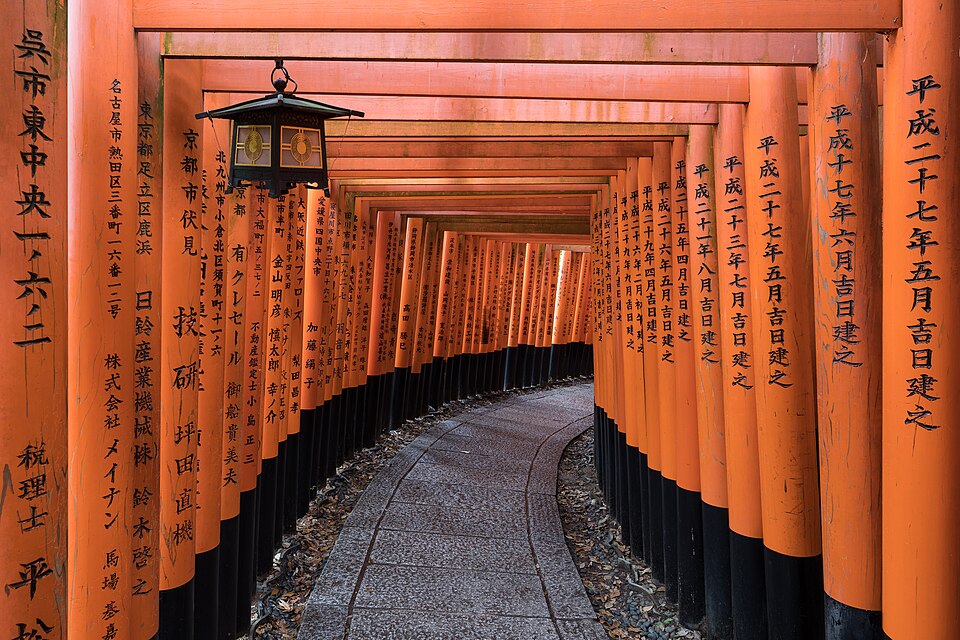
Walk up through the torii gates of Fushimi Inari-taisha, the head shrine of the kami Inari. Wikipedia says it is open around the clock with no entrance fee, so you can pick your hour.
Fushimi Inari-taisha1. Fushimi Inari-taisha
The head shrine of the kami Inari, at the foot of Mount Inari (233 m). Roughly 10,000 torii gates line the paths up the mountain, which run about 4 km and take around 2 hours to walk up.
Wikipedia describes the shrine as open 24 hours with no entrance fee. It gets very busy over the Japanese New Year.
15,391 readers a month
2. Kiyomizu-dera
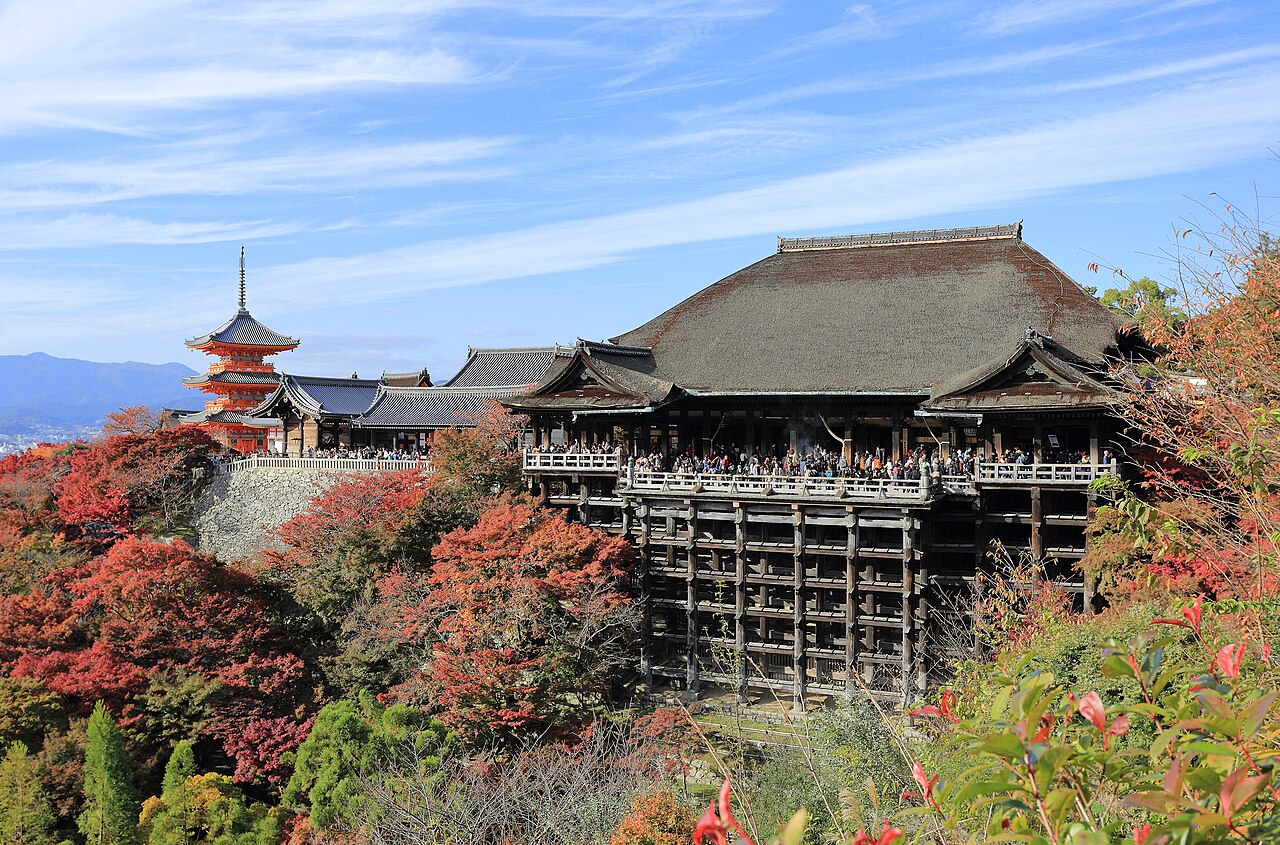
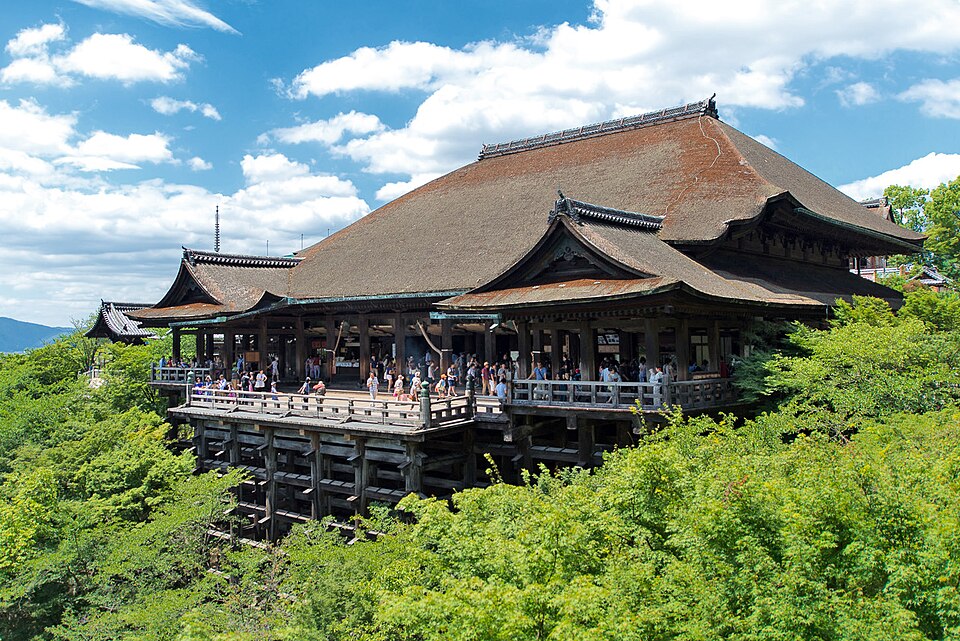
A Buddhist temple in eastern Kyoto, founded in 778 and part of the Historic Monuments of Ancient Kyoto UNESCO site (1994). The main hall, a National Treasure rebuilt in 1633, has a large wooden veranda on tall pillars over the hillside, and the Otowa waterfall runs below it.
The sources we read do not give opening hours or ticket prices; check the temple's own site before you go. The complex was covered in scaffolding for restoration work before the 2020 Olympics.
10,720 readers a month
Sources
3. A day trip to Nara
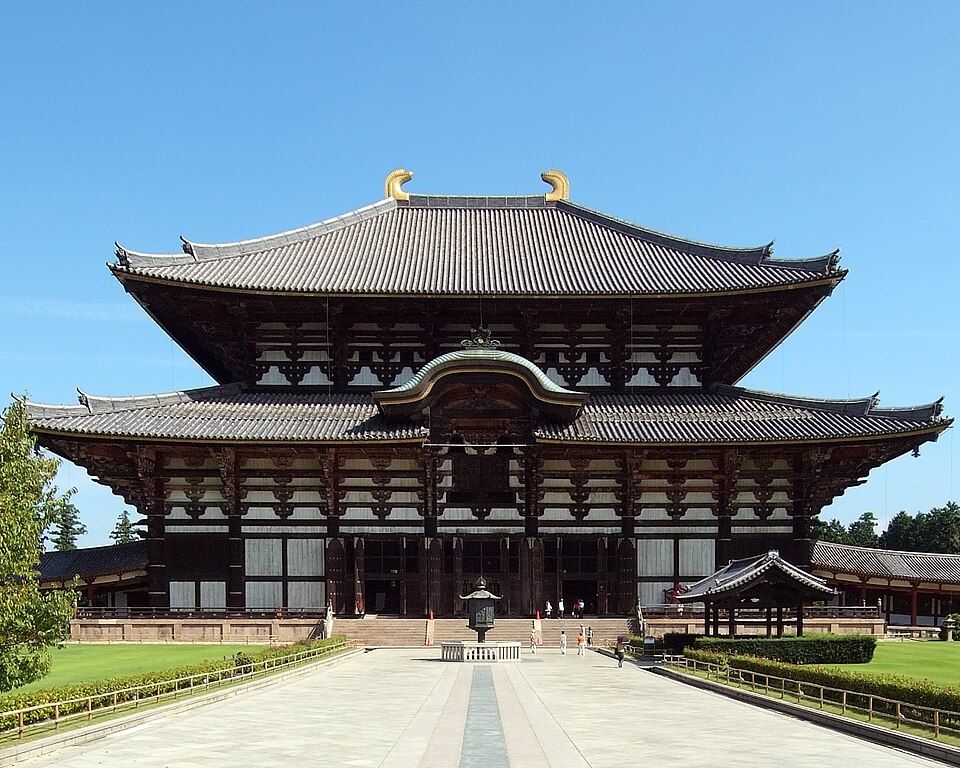
Japan's capital from 710 to 784, with a UNESCO World Heritage listing from 1998 that includes Todai-ji, Kofuku-ji and Kasuga-taisha. Tame sika deer roam the town and park; Todai-ji's main hall is described as the world's largest wooden building.
Wikipedia notes that the park's deer have been found to be malnourished by relying on crackers, so watch them rather than feed them. We have not confirmed rail times from Kyoto; check before you go.
10,478 readers a month
Sources
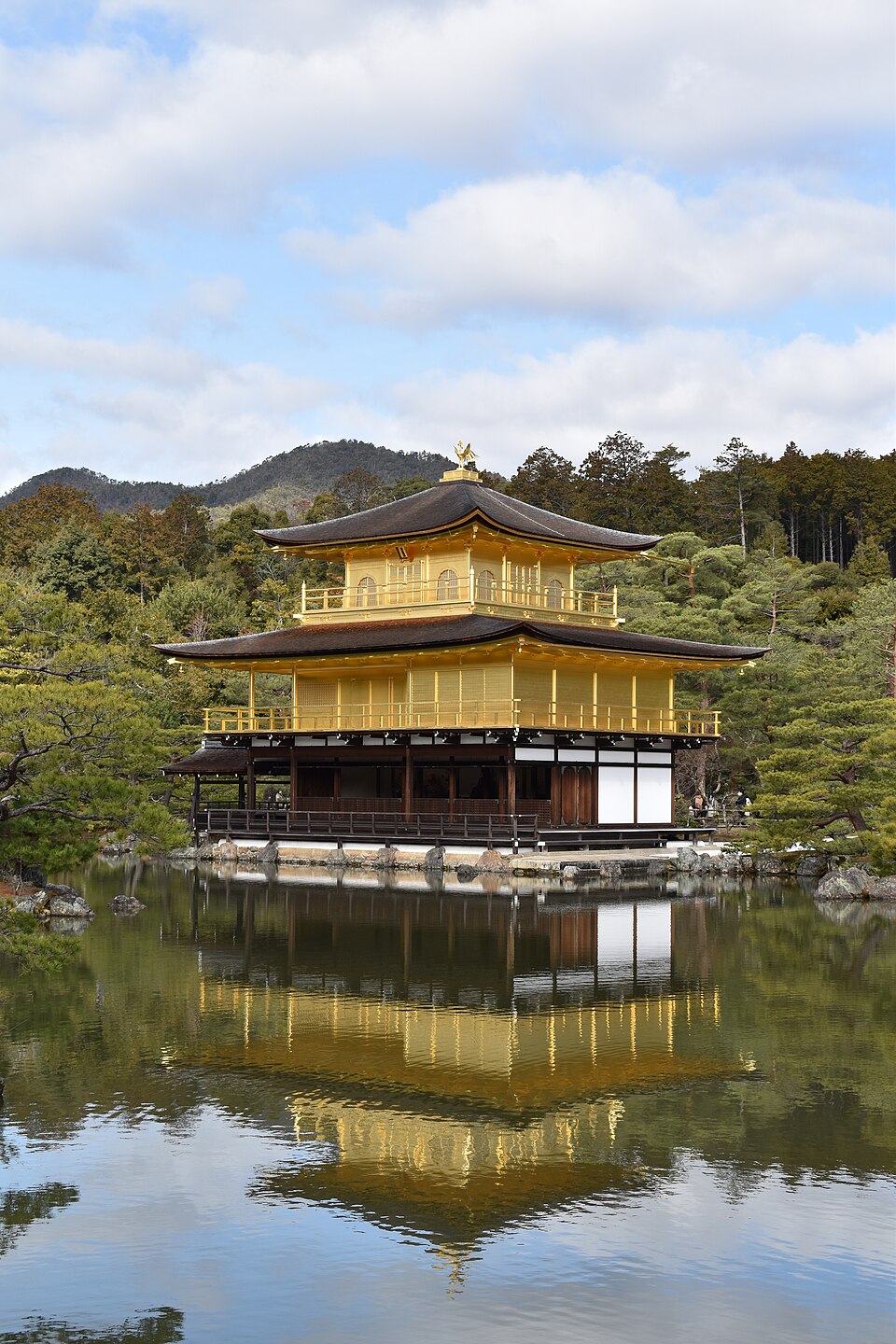
4. Kinkaku-ji, the Golden Pavilion
A Zen temple known as the Golden Pavilion, a World Heritage Site. The top two floors are covered in gold leaf. The villa became a temple after Ashikaga Yoshimitsu's death, and the pavilion was rebuilt in 1955 after an arson attack in 1950.
The sources we read do not give opening hours or ticket prices; check the temple's own site before you go.
10,149 readers a month
Sources
5. Kyoto Imperial Palace
The former palace of the Emperor of Japan from 1331 to 1869, in the grounds of Kyoto Gyoen park. The grounds are open to the public, and the Imperial Household Agency runs tours of the buildings several times a day.
Wikipedia does not say whether building tours need a reservation or what they cost; check the Imperial Household Agency's site before you plan.
7,166 readers a month

Unknown author, Public domain 6. Nijo Castle
A flatland castle built for the Tokugawa shogunate and finished under Tokugawa Iemitsu in the 1620s, part of the Historic Monuments of Ancient Kyoto. The Ninomaru Palace corridors have 'nightingale floors' that chirp underfoot, and in 1867 the last shogun announced the return of power to the Emperor here.
The sources we read do not give opening hours or ticket prices; check the castle's own site before you go.
5,729 readers a month
Sources
7. Arashiyama and Tenryu-ji
A scenic district on Kyoto's western edge, best known for the Sagano bamboo grove, the Togetsukyo bridge and the Iwatayama Monkey Park, where over 170 wild monkeys live. Tenryu-ji, founded in 1339, is a UNESCO-listed Zen temple here.
The sources we read do not give opening hours or ticket prices for the temple or the monkey park; check before you go.
4,418 readers a month
8. Byodo-in, Uji
A Buddhist temple in the city of Uji, Kyoto Prefecture, built as a villa in 998 and turned into a temple in 1052. The Phoenix Hall (1053) holds an Amida Buddha statue and appears on the Japanese 10-yen coin; the temple is UNESCO-listed.
The sources we read do not give opening hours, ticket prices or the journey from central Kyoto; check before you go.
4,184 readers a month
Sources
9. Ryoan-ji rock garden
A Zen temple in north-west Kyoto founded in 1450. Its dry garden, about 25 m by 10 m, has 15 stones in five groups on raked white gravel, with moss as the only plant. The temple is a UNESCO World Heritage Site.
The sources we read do not give opening hours or ticket prices; check the temple's own site before you go.
3,224 readers a month
Sources
10. Gion
Kyoto's best-known geisha district, which grew up in front of Yasaka Shrine. Hanamikoji is the main street in Gion Kobu; the Miyako Odori dances run through April. Part of the district is a national historical preservation district.
This is a working neighbourhood; be considerate when photographing residents and performers.
3,120 readers a month
Sources


Just missed the list: Tō-ji (11th; a Shingon Buddhist temple in Minami-ku); Ginkaku-ji (12th; the Silver Pavilion Zen temple in Sakyo ward)
How we ranked these
By how many people read about each place on English Wikipedia in a typical month, measured October 2026. It is a popularity measure, not our opinion. Fushimi Inari-taisha leads with about 15,391 readers a month. Photos come from Wikimedia Commons under free licences; the author and licence are on each photo.
Research required. Area notes for this destination are not written yet. The top 10 above is sourced; the rest of this page is an outline.
Affiliate disclosure: Booking links on this site are partner links. Once our partnership is active we earn a commission if you book, at no extra cost to you. It does not change what we recommend. How this works.